
Concrete spalling
Concrete Spalling: Why the Surface Flakes and How It Is Repaired
Flaking, pitted concrete is water or a weak mix eating the top of the slab. Caught early it is a patch or a new top layer, not a new slab.
Free, no-obligation estimates. We look at the slab and tell you which fix it needs.
- Free, no-obligation estimates
- Same-working-day callback
- The whole job quoted before we start
Know it when you see it
What concrete spalling is
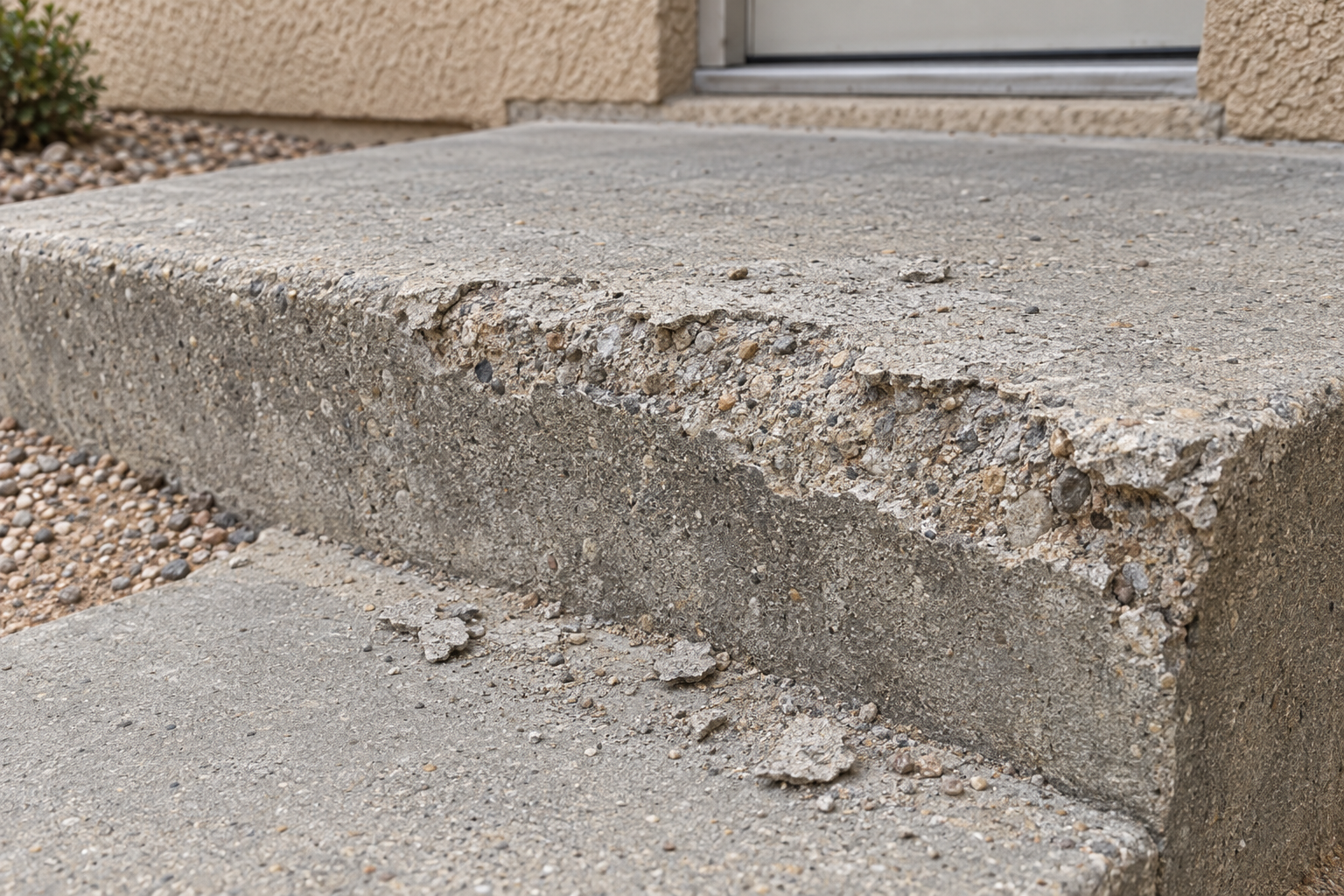
Spalling is the top of the concrete flaking, chipping and pitting away, most often because moisture got into it or the mix was weak to begin with.
The trade word for it is "spalling", and the damage sits in the surface layer: the slab can still be flat and whole underneath while its top breaks up.
It shows up on steps, walks, driveways and patios, and it tends to start where water sits longest: low spots, edges and the treads of steps.
The American Concrete Institute publishes the trade's guidance on concrete materials, curing and repair.
The trade word
Spalling
The homeowner's word: "flaking concrete"
What it looks like on a slab:
- FlakingThin sheets of the top layer peel off and leave a rough patch below.
- PittingSmall craters open across the surface where pieces have popped out.
- ChippingEdges and corners break away, most of all on steps.
Not every flake is spalling. Color peeling off a sealed or stamped slab is usually "failing sealer", the old sealer letting go, and that is fixed by stripping it and resealing.
Where it starts
What causes spalling
Moisture held in the pores that expands and contracts, freeze-thaw cycles and a mix watered down on site weaken the surface until it flakes.
Three things wear the top of a slab down:
-
Moisture in the pores
Concrete is full of tiny pores that take in rain, sprinkler water and puddles. Each time that trapped water expands and contracts, the top layer loosens a little more.
-
Freeze-thaw cycles
On a slab that sees frost, ice forms inside the concrete and pries at it from within. Each thaw lets in more water for the next freeze.
-
A mix watered down on site
Water added on site makes concrete easier to place and weaker once it sets. A mix watered down on the truck cures out much weaker than its rated strength, and the top goes first.
Not sure which one is behind yours? Tell us where the flaking is and when it started, and we will tell you what we would look for.
(951) 439-3217Match the fix to the damage
Patching, resurfacing or replacing spalled concrete
Small spalls are patched and color matched, a slab that is spalled widely but still sound is resurfaced, and a slab that is failing is replaced.
Which one your slab needs comes down to how far the damage has spread and what shape the slab is in below the surface.
Spots here and there
Patch and color matchWe take out the loose and flaking concrete and fill the spot with a patch matched to the color and type of the slab around it, so it reads as part of the concrete.
Worn all over, solid below
Resurface itResurfacing suits concrete that is structurally sound but worn. A new top layer, an "overlay", is bonded over the old surface, and it costs far less than tearing the slab out.
Breaking apart
Replace itMajor settling, wide cracking in many places or sections breaking apart point to replacement. A new top layer has nothing solid to hold on to.
We look at the slab, tell you which fix it needs and quote the whole job before we start. Concrete Network: Concrete Repair explains how damage like this is judged.
Keep the water out
Keeping spalling from coming back
Seal the repaired concrete: sealing keeps water out of the pores that spalling starts in.
The repair fixes the damage you can see, but the slab still drinks in rain and sprinkler runoff the way it did before. That is the part a coat of sealer answers.
We answer the phone or call back the same working day.
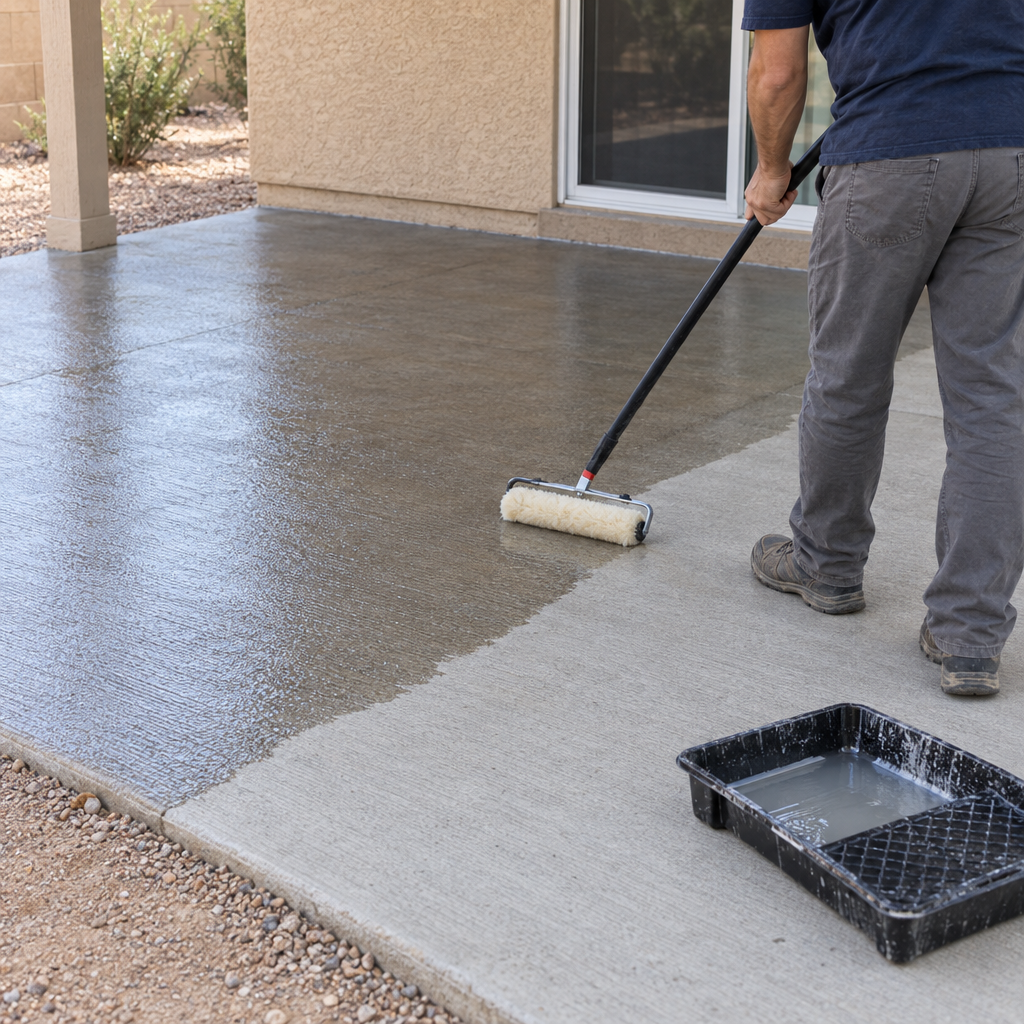
Sealing repaired concrete
Sealer slows spalling down rather than stopping it for good, so repaired concrete should be resealed and kept sealed. Water that gets into concrete weakens it and cracks it.
Resealing takes three steps:
- Pressure washthe surface clean
- Let it dryall the way through
- Roll on sealerin an even coat
How serious spalling is
Spalling is mostly a surface problem at first, but left alone it can let water in and the damage may spread.
A broken surface takes in more water than sound concrete, and temperature swings and ground movement keep working on it. That is how a few spots on a step turn into a whole slab that needs resurfacing, so it pays to call while a patch still does the job.
From our Google reviews
Neighbors on the work we do
These are our own Google reviews, shown exactly as they were written.
I hired this concrete contractor for my driveway replacement and I couldn’t be happier with the results. The team was professional, showed up on time, and worked efficiently to get everything done ahead of schedule. The finish is smooth, durable, and really improved the curb appeal of my home. I would definitely recommend them for any concrete work.
Nick, and coworker did a outstanding job. Working on our front yard. My neighbor was so impressed he’s planning on hiring Nick, to do their front yard. Thanks, Nick
Trustworthy, dependable, and quality service. Greenscape Projects transformed my backyard space into a beautiful oasis. Budget friendly prices. Affordable landscaping made possible with greenscape Projects. They arrived on time, cleaned up afterwards and sent pictures of the progress. Trust Greenscape Projects for all of your landscaping, gardening, yardscaping needs.
Flaking steps or a pitted driveway? We will come and look.
Tell us where the surface is coming apart. We come out, look at the slab and tell you plainly whether it needs a patch, a new top layer or replacing, and the estimate costs you nothing.
We quote the whole job before we start, with no surprise charges after, and we clean up when the work is done.